Tamasha x Hachette: Creative Writing Programme
From Stage to Page - Supporting Global Majority Playwrights into ProseBetween 2018 and 2020, Tamasha and Hachette UK proudly ran the Tamasha x Hachette Creative Writing Programme – a ground-breaking course designed to support Global Majority writers in developing their skills in prose fiction and non-fiction.
Born from a shared ambition to open the publishing industry to new voices, the programme offered writers the chance to explore long-form storytelling beyond the stage.
About the Programme
Delivered in two cohorts over two years, the course ran weekly over three months, with two-hour sessions combining creative writing workshops, industry insights, and one-to-one mentoring.
Each year, the programme offered two parallel strands:
- General Fiction & Non-Fiction, in collaboration with editors from Hachette, Little, Brown and Orion
- Science Fiction & Fantasy, supported by the team at Gollancz
Participants received tailored feedback on developing a synopsis and sample chapters, alongside masterclasses led by published authors, agents, and editors. Writers also received guidance from dedicated mentors throughout the course.
Origins & Evolution
The first year began as a pilot, initially focused on general fiction. Former and current Tamasha Playwrights were invited to apply, with the intention of helping theatre writers explore fiction for the first time.
However, a high volume of sci-fi and fantasy submissions led to the addition of a dedicated speculative fiction strand in the second year – widening the programme’s scope and reflecting the breadth of stories coming from diverse communities.
Success Stories
The programme had an immediate and lasting impact. From the first cohort alone, four writers went on to secure publishing deals.
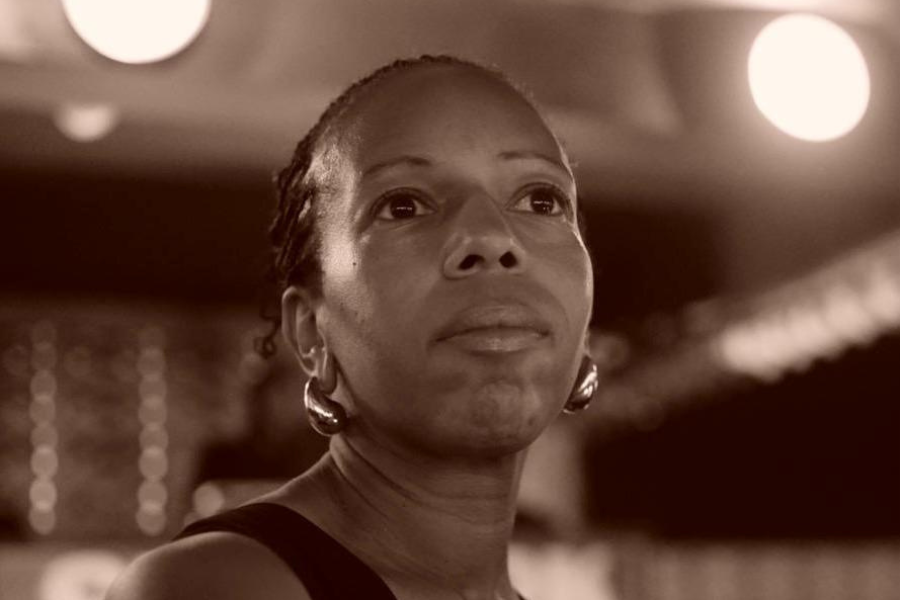
Mel Pennant
“I’ve always aspired to write a book but had no idea how to approach it. I saw the programme as an opportunity to diversify creatively, and I loved the idea of being part of a peer group of other playwrights, stepping into something new together.
The programme provided me with confidence – it lifted a veil off the industry and gave me confidence that my voice could be heard within in – that there was no reason why I couldn’t write and publish a book.
A Murder for Miss Hortense, was published in June 2025 and is the first in my new crime series starring Miss Hortense – a retired nurse, avid gardener, and renowned cake maker who has lived in Bigglesweigh, a quiet suburb of Birmingham, England, since she emigrated from Jamaica in 1960. She takes great pride in her home, starching her lace curtains bright white, and she can tell if she’s being shortchanged on turmeric before she’s taken her first bite of a beef patty. A career in nursing has also left her afraid of nobody, whether an interfering priest or a local drug dealer, and she’s an expert in deciphering other people’s secrets with just a glance.
Miss Hortense once used her skills to benefit the Pardner network—a local group of investors that she helped found. Until, that is, she was unceremoniously ousted from its ranks, severing her ties to the majority of her friends and community. That was thirty years ago. Now, as a new millennium dawns, an unidentified man has been found dead in the home of one of the Pardner members, a Bible quote written on a note beside his body. Suddenly, Miss Hortense finds her long-buried past rushing back, bringing memories of the worst moment of her life—and secrets behind an unsolved crime that has haunted her for decades. It is finally time for Miss Hortense to solve a mystery that will see her and the community she loves pushed to their limits.
Words can’t express what it means to me to publish A Murder for Miss Hortense. It has been a dream come true. It’s been fantastic!”

Phoebe McIntosh
“The workshops were very insightful. Each run by a different author, agent or editor from the publishing industry, they shone a light on the various ways in and techniques to developing our long form writing. I remember an author teaching us her technique of plotting out her novel using post-its! Post-its of one colour for characters, another for sub plots. It sounds basic but it was such an easy to adopt, tangible way to get ideas and structure flowing. I use it to this day. The group I was part of and the peer interactions were wonderful and I feel fortunate to have maintained those relationships all these years later, counting many of my cohort now as close friends. We meet up regularly and share our experiences of writing, publishing and navigating topics like book to screen, bookshop events and how /when to tackle that tricky next novel.”
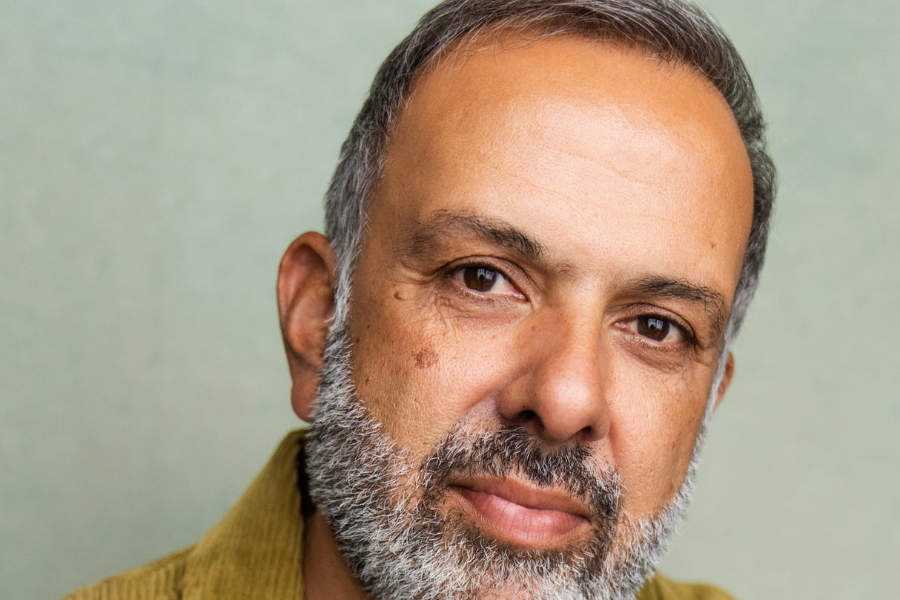
Amman Paul Singh Brar
“My novel, Mr Sidhu’s Post Office is dear to my heart because the main character is based on my father who passed away in 2017. I knew I wanted to write about my father through the lens of the Post Office he ran for twenty years. It was while researching sub-post offices that I came across the Post Office Scandal and when I read about all the terrible things that happened to them, I knew I needed to put a light on that and that it had to be part of the story.
Like all programmes, don’t do it on a whim. Do it as a springboard that will propel you towards a goal which should be getting your book published. Find out as much as you can on the course, ask all the stupid questions you need to, but in the end, it is about sitting down and writing, writing and writing. Then when you can’t read your own work again, keep doing it and writing it until your eyes bleed. Also get a good agent.”
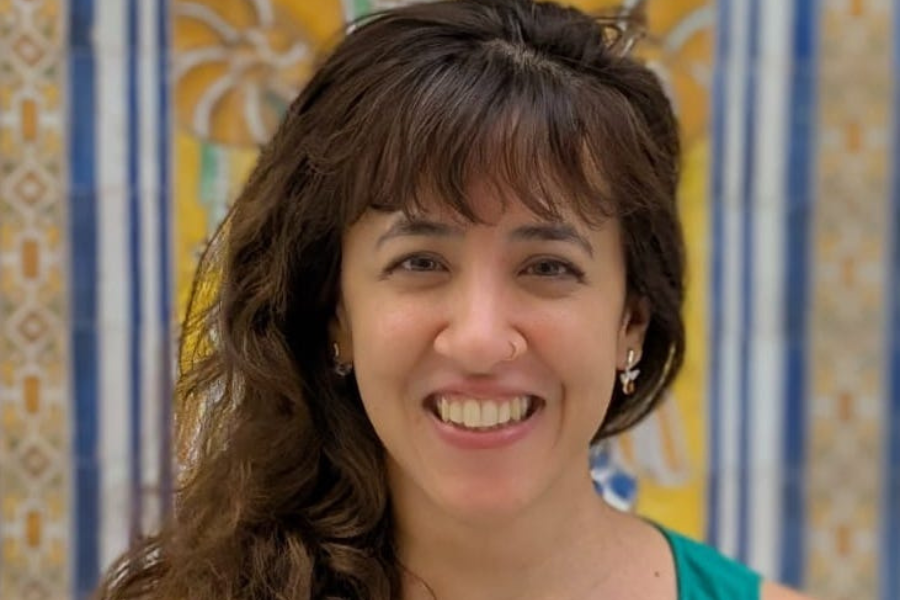
Ayesha Manazir Siddiqi
“To be surrounded by other playwrights of colour hoping to be novelists was wonderful. Sharing our anxieties and fears, hopes and ambitions, meant a lot.
My novel, The Centre, was published by Picador in 2023. It’s about a Pakistani translator who lives in London and comes across a mysterious language school that promises total fluency in just ten days, but at a secret, sinister, cost. The novel was well received and, in many ways, changed my life. It’s impossible to encapsulate the intensity of what it felt like to have a book out in the world, and now, having completed my second, it feels like it’s really opened doors to the career I am trying to build for myself.
For me, courses and workshops like the Hachette one is enormously helpful, so I’d say, do it! Give yourself that gift, as it is also an act of taking yourself seriously as a writer, and of carving out time for something important. Also, with whatever the dream project is, I’d say be easy on yourself but also know that it’s possible. Holding your dreams with ease and trust feels key. And another key: dedication. Essentially, this and similar programmes provide a framework, and encouragement, and even a kind of reminder to keep going but there is no short-cut: the writing has to happen. Every day, even if for ten minutes, write. This is a note to myself as much as an answer to the question, as I still need to frequently remind myself to simply do the work – that’s the only part of it I have control over.”
A Legacy of Opportunity
These successes demonstrate the power of targeted, inclusive development to create meaningful pathways into publishing, as well as a template for other creative sectors. Though the programme has now concluded, it has laid vital groundwork for future collaborations between theatre and publishing – and has proven the immense potential of theatre writers as novelists, essayists, and storytellers in all forms.