Posted: 31 March 2026
Artist Spotlight: Curator, NAJA SURATTEE
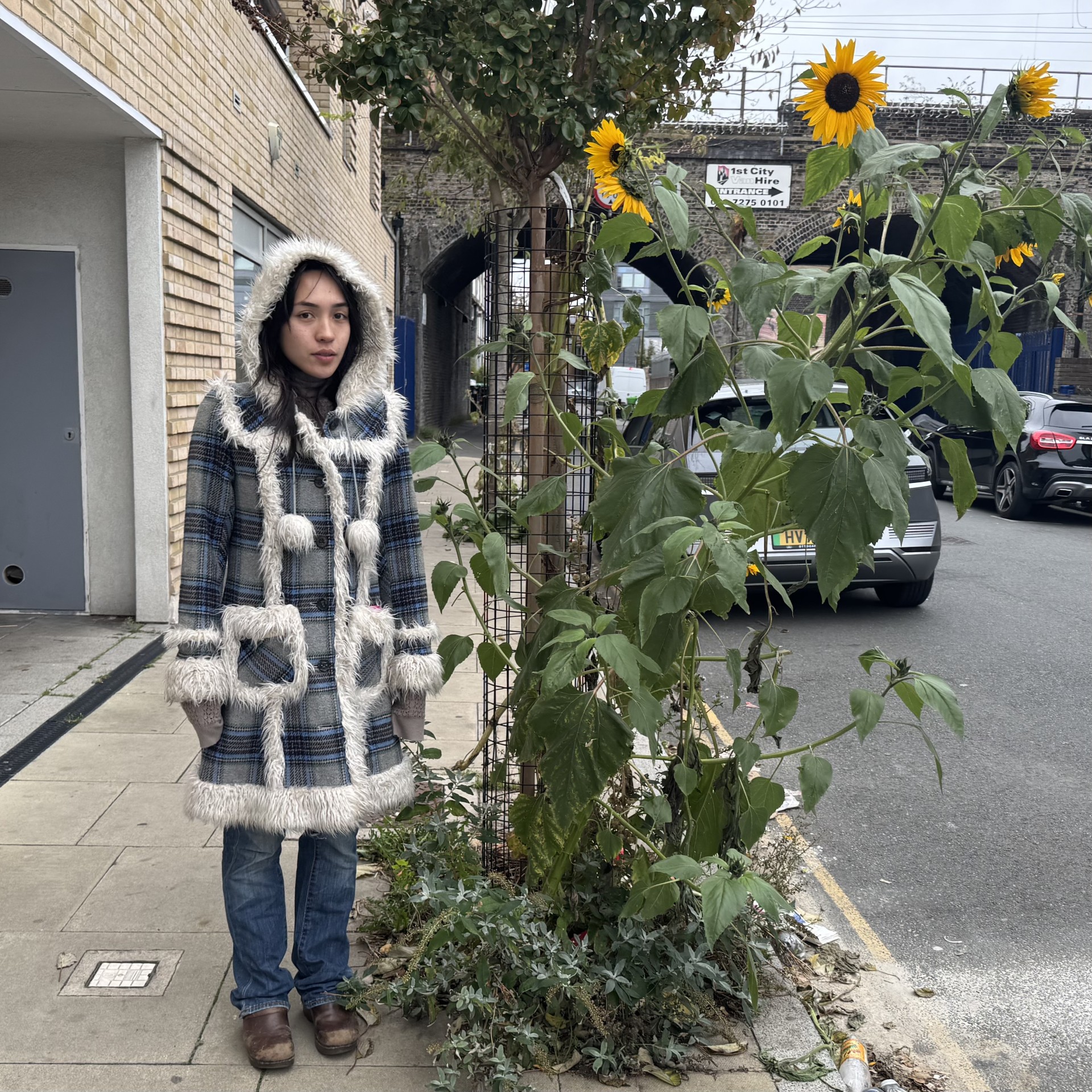
Naja’s curatorial practice engages the immateriality of destined encounters. She is the founding editor of Run Ins, an independent publication commissioning writing, visual art, and hybrid works through inquiries into spontaneity and violence in city life. The publication extends from print into exhibitions and live performance with a punk-informed editorial sensibility. Here, the material object is utilised as a space where experimental literary and artistic practices meet and differences are traversed. The second issue of Run Ins, 02: Noise Complaint is due to launch in May 2026.
Alongside this, her self-led experimental club series, Greetings, brings together ambient, jazz, garage, noise, computer music, and live audiovisual performance, inviting audiences into states of deep listening and shared attention. Across her projects, she is interested in the formation of unlikely and attentive spaces where discomfort and chaos forge a sense of closeness.
Tell us a bit about yourself and your creative journey so far
I’m a curator practicing across sound, performance, and print. I had my start in theatre, working backstage since I was 15. I think that’s where I gained foundations in showmaking and production, what it takes to present an idea to a room. I started organising gigs when I was 17 in Singapore and when I moved to London I started going for jams and was taken by the possibilities of sound, how it is a boundless language.
I started my experimental party series called Greetings in in 2023. I wanted to dance to my favourite artists in one night and decided to make it happen. It was a lineup of dreams that placed unlike genres together, leaning into common cacophony. That first night was a magical one and It taught me that you can do whatever you want once you figure out how. The series felt like a playspace where I could design exactly what I would want to hear, see, and feel, bringing in audiovisuals and dance, probing at audience expectations.
In the past year I’ve started a literary and art publication project called Run Ins with my friend Lucy Lin, exploring serendipity and violence as the underpinning matrix of cities. I was really drawn to a book’s ability to document and hold a sense of permanence. I think I was seeking an alternative to a the immaterial nature of sound and performance, where the moment is in that space and time only. Our inaugural issue was themed chance encounters, we featured 17 writers and artists and had an exhibition style launch where the contributions were transposed into exhibits, videos, voice recordings, and live visuals. It was such a special experience to engage with the relations of exhibits in a space, imaging how someone would walk through, how I’d reveal a scene to the audience.
How would you describe your practice and the kind of stories you’re drawn to?
I would describe it as self-governed and tactile. I’m drawn to anything honest.
How has your personal experiences or identity shaped your artistic voice?
I moved very far from home when I was quite young to a very different culture. It gave me the chance to decide who I was outside of expectations and taught me how much we are shaped by our environment. I think my approach asks a lot of questions to do with form and expectation, why things are one way when they could be another.
What does representation in the arts mean to you and how does it show up in your work?
For me representation is about expanding the perspective on a matter, being open to the idea that we can’t have the full picture alone. In my work, I always prefer a cacophony to a single note and texture.
Who or what inspires your work?
I am inspired by people who are themselves fully and honestly. I want to make work that is full and honest.
What does your creative process look like, from idea to realisation?
I think it starts with a scene/image, then I conceptualise and give it words, then I tell people I trust and people I want to involve, the idea sheds and gets reaffirmed many times, with enough reaffirmation it gets made and if it’s not strong enough it doesn’t hold up for me.
Have there been any challenges navigating the industry and how have you responded to them?
It can be a bit intimidating to come to spaces where you don’t know anyone and no one knows you. I try observe a lot and ask questions.
How do you approach collaboration when working across disciplines and forms?
I think a lot of it is semantics so it’s about learning the language of the discipline and finding its equivalent in others. The experience of art and artmaking I think is one of the great unifiers between people and the beings and world around us. You can be drawn to something without understanding it and without the technical ability to make it. I think theres an innocence in that transcends the ideas of difference.
What’s coming up next for Naja Surattee?
We launch this issue on the 1st of May at FILET in Hoxton, I’m really excited by the form its taking and I can’t wait to tour it around. The summer feels open and expansive, there’s lots of artists I’m inspired by right now and I’d love to do some new stagings.